IPv6 passes half of Google’s users: what the milestone does and doesn’t mean
In March 2026, for the first time, more than half of the users reaching Google arrived over IPv6. Why that majority and the website majority still point in opposite directions.
On 28 March 2026, for the first time, 50.1% of the users reaching Google that day came over IPv6, up from about 46% a year earlier. It is one company measuring its own users, but it is the most-quoted gauge of IPv6 adoption there is. Mobile carriers got there years ago (many phone networks are v6-only inside, translating at the edge) and home broadband has quietly followed.
So is IPv4 dying?
No, and that is the interesting part. The majority flipped because a handful of giants (the streaming, social and cloud platforms that dominate volume) are fully dual-stacked. The site count tells the opposite story: the long tail of the web, millions of smaller sites, remains v4-only behind ever-more-creative NAT. Users of the biggest platforms are now majority v6; websites are still majority v4. Both facts are true, and knowing why is a genuinely good interview answer.
The economics have shifted from push to pull: an IPv4 address now costs real money on the transfer market, while v6 space is effectively free. Every new deployment that starts dual-stack is one less reason for the old protocol to exist, but the tail will be decades long.
What learners should do about it
Stop treating v6 as the optional chapter. Enable it on your home lab, watch its neighbour discovery replace ARP in a capture, and get comfortable reading eight hex groups. The IPv6 lesson covers the two shortening rules that make addresses readable.
Why this matters if you’re learning networking: Dual-stack reality is the default environment you will troubleshoot in. “Works on v4, breaks on v6” tickets are common precisely because engineers skipped the chapter: do not be that engineer.
Keep reading
Related
-
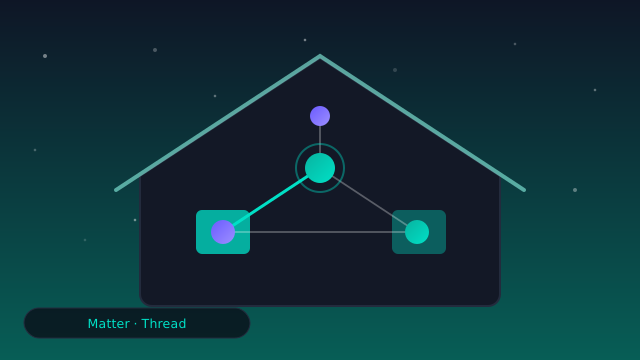
Matter and Thread: will the smart-home VLAN workaround retire?
IoT segmentation gets easier as devices speak a common, certifiable language. What Matter and Thread change for your guest-VLAN hack, and what they don't.
-
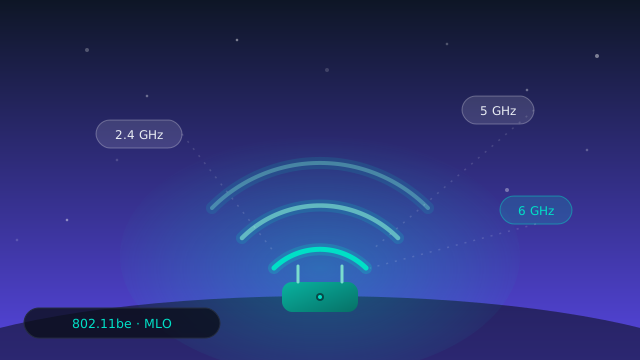
Wi-Fi 7 Multi-Link Operation (MLO): what it changes for your home lab
MLO is the headline feature of Wi-Fi 7. What actually changes for latency and for your packet captures, and what is still marketing or waiting for Wi-Fi 8.
-
RPKI passes 60% of IPv4 routes: what a signed origin protects, and what it can’t
A quiet security milestone: most announced IPv4 routes now carry a valid signed origin. What that stops, what it can't, and why the rest is slow.