Matter and Thread: will the smart-home VLAN workaround retire?
IoT segmentation gets easier as devices speak a common, certifiable language. What Matter and Thread change for your guest-VLAN hack, and what they don't.
The smart-home VLAN is a rite of passage: quarantine the cheap cameras and plugs on their own segment so their questionable firmware cannot reach your laptop. It works (our VLANs lesson even uses it as the motivating example) but it is a workaround for a trust problem, not a solution to it.
Matter is the industry’s attempt at the actual solution: one standard, certified device behaviour, local-first control, and per-device credentials instead of everything sharing the Wi-Fi password. Version 1.4 (November 2024) closed gaps that kept serious users away: better multi-admin (the same lock controllable from two ecosystems), energy-management device types, and home routers that double as Thread border routers. Version 1.5 (November 2025) added cameras, the device people most often quarantine first.
Thread, the interesting layer
Under many Matter devices sits Thread: a low-power IPv6 mesh where battery devices route for each other, joined to your LAN through border routers. For a networking learner it is a gift: a real, inspectable IPv6 network in your living room, complete with routing decisions you can watch happen.
The VLAN habit will not die tomorrow; certified behaviour still is not trusted behaviour. But the direction is clear: segmentation is becoming something devices cooperate with, rather than something inflicted on them.
Why this matters if you’re learning networking: Thread makes IPv6 mesh routing tangible with hardware you may already own, and “how would you isolate untrusted devices” remains a beloved interview question whose best answer is evolving.
Keep reading
Related
-
What the 800G Ethernet ramp means for data-center design
Optics, not switch silicon, are the bottleneck now. A plain-English tour of the numbers behind the spec sheets.
-
IPv6 passes half of Google’s users: what the milestone does and doesn’t mean
In March 2026, for the first time, more than half of the users reaching Google arrived over IPv6. Why that majority and the website majority still point in opposite directions.
-
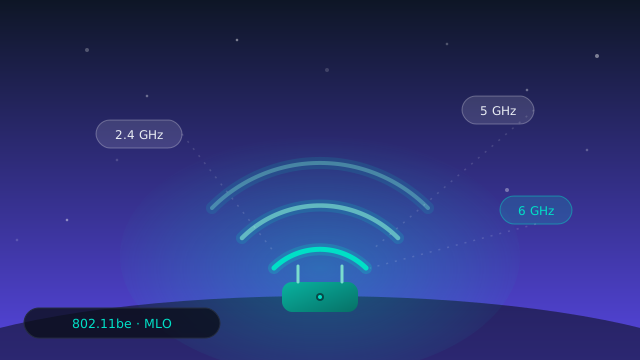
Wi-Fi 7 Multi-Link Operation (MLO): what it changes for your home lab
MLO is the headline feature of Wi-Fi 7. What actually changes for latency and for your packet captures, and what is still marketing or waiting for Wi-Fi 8.